Kitchen Mistakes
Food News

Why Using the Wrong Knife for Tomatoes Crushes Them Instead of Slicing

Yummy Editorial
Photo: Why Using the Wrong Knife for Tomatoes Crushes Them Instead of Slicing

The Tomato Massacre on Your Cutting Board

It's Saturday morning, and you're making caprese sandwiches for lunch. You grab a beautiful heirloom tomato from the market—the kind with deep red flesh and that green, earthy smell still clinging to the stem. You set it on the cutting board, reach for your favorite chef's knife, and press down. Instead of a clean slice, the tomato squishes. Seeds and juice spray across the counter. The slice looks mangled, torn rather than cut. You try again with the next tomato, pressing harder this time, but it only makes things worse.

This isn't about your knife skills. It's about physics, and you've been using the wrong tool.

Why Tomatoes Are Different from Almost Everything Else

Tomatoes have a structure that challenges every cutting technique we use for other ingredients. Their skin is taut and waxy, designed by nature to protect the soft, gel-filled interior. That combination—firm exterior, liquid center—means you need a knife that can break through the surface without applying crushing pressure to what's underneath.

When you use a standard chef's knife with a smooth blade, you're essentially trying to force your way through. The blade's edge needs to compress the tomato's skin enough to puncture it, and that compression travels through the entire fruit. By the time you break the surface, you've already squeezed out half the interior. It's like trying to cut a water balloon with a letter opener.

What Actually Happens When You Use the Wrong Knife

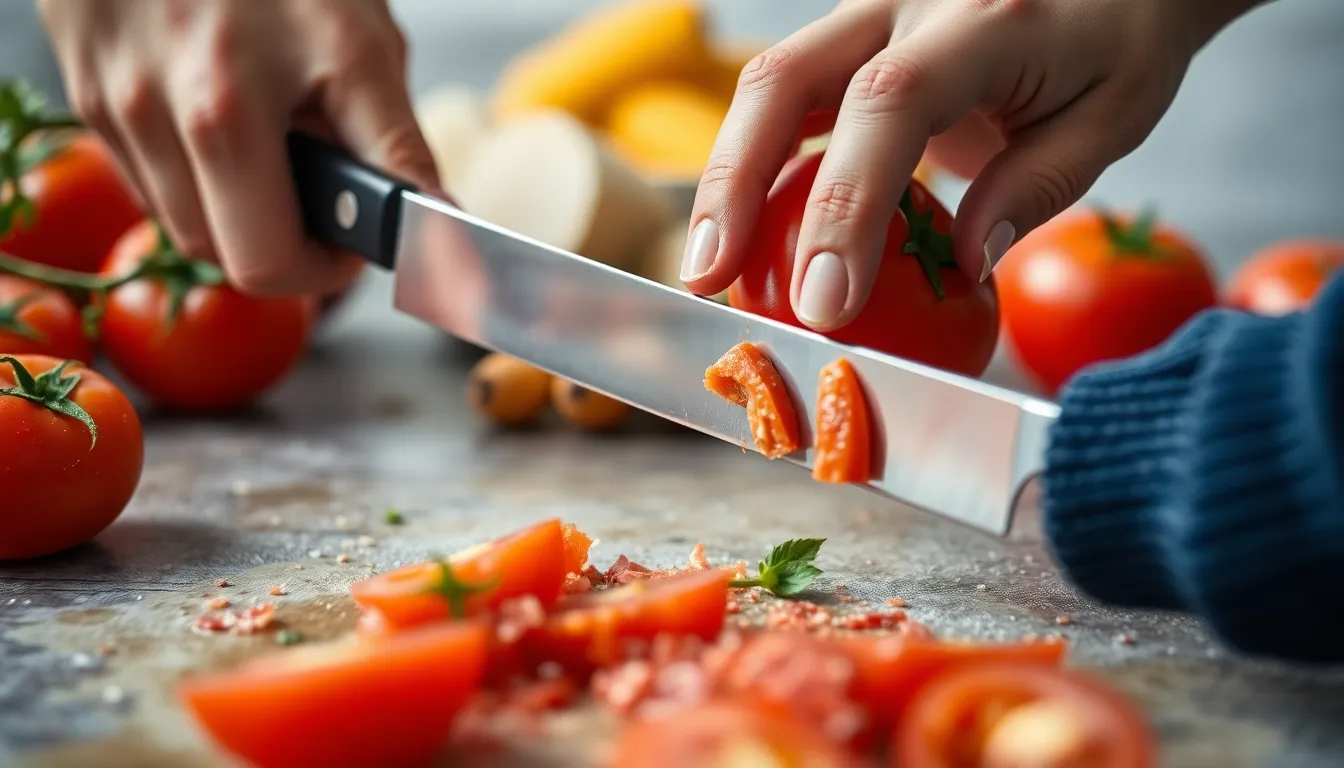
Picture your chef's knife at a microscopic level. Even freshly sharpened, it has a smooth cutting edge that relies on downward pressure and a slicing motion to separate ingredients. For an onion or a carrot, that works beautifully. For a tomato, it becomes a disaster.

As you press down, the tomato's skin resists. The flesh beneath it compresses like a sponge. The locular gel around the seeds starts moving, squishing sideways before the blade even penetrates. When the skin finally gives way, everything inside has already been displaced. You're left with ragged edges, separated walls, and a puddle of tomato water spreading across your board.

The duller your knife, the worse this becomes. A blade that's lost its edge requires even more pressure, turning each slice into a full-body workout that ends in tomato carnage.

The Serrated Solution Nobody Talks About Enough

A serrated knife works on an entirely different principle. Those little teeth—technically called gullets—grip the tomato's skin immediately. Instead of compressing and hoping for penetration, the serrated edge saws through the surface with barely any downward force. It's the difference between pushing a nail through wood and using a drill bit.

You can test this yourself. Hold a tomato gently in your palm and draw a serrated knife across the top with almost no pressure. The blade grabs the skin and cuts through before your hand feels any resistance. The interior stays intact because you haven't compressed it. The slice comes away clean, with distinct walls and seeds that remain in their pockets.

This is why bread knives work so well for tomatoes. They're designed for crusts—another situation where you need to cut through a firm exterior without smashing soft insides.
What to Look for in a Tomato Knife

Essential kitchen gear for your recipes

Hand-picked tools we recommend for home cooks.

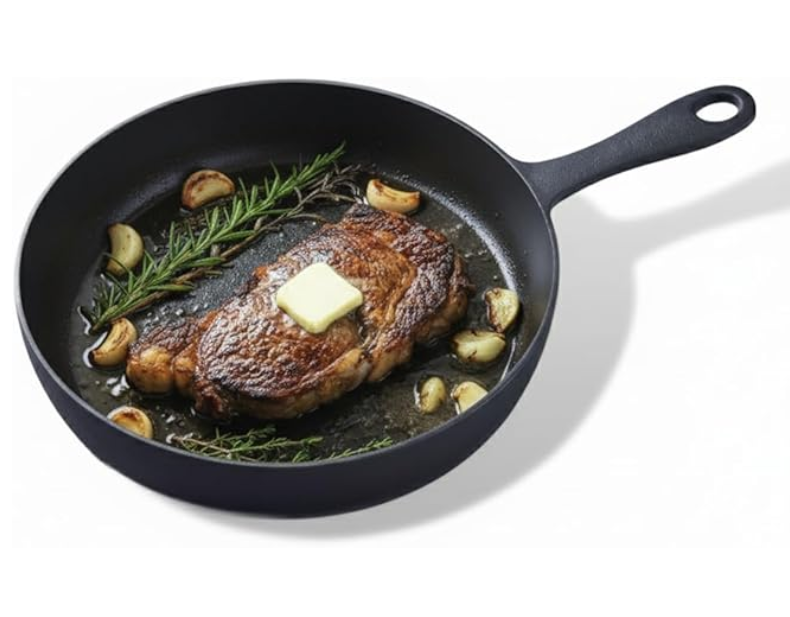
Flambo Skillet, Naturally Non-Stick

Flambo Skillet, Naturally Non-Stick

Pre-seasoned cast iron skillet for searing, baking, and stovetop-to-oven cooking.

Check price on Amazon
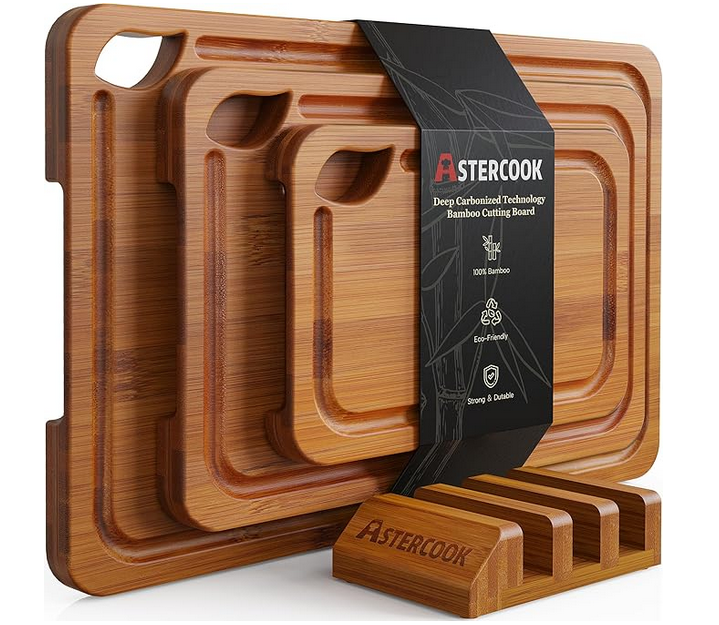
Astercook Reversible Charcuterie Board

Astercook Reversible Charcuterie Board

Deep carbonized wooden cutting board, reversible and knife-friendly for prep and serving.

Check price on Amazon
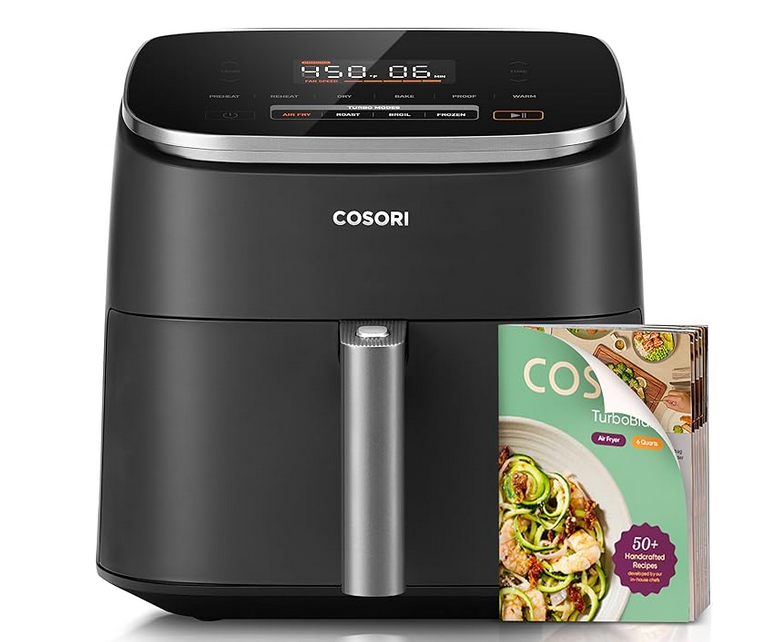
TurboBlaze Premium Ceramic Coating Air Fryer

TurboBlaze Premium Ceramic Coating Air Fryer

Air fryer with ceramic coating, 90°F–450°F range for crispy results with less oil.

Check price on Amazon

Not all serrated knives handle tomatoes equally. The ideal blade has teeth that are closely spaced and relatively shallow. Deep, aggressive serrations like you'd find on a steak knife can grab too much, tearing rather than slicing. You want something that feels almost delicate—a blade that whispers through the skin rather than attacking it.

Length matters less than you'd think. A five-inch serrated utility knife often outperforms an eight-inch bread knife for tomatoes because it's easier to control. You're making precise cuts, not sawing through a baguette.

The blade should feel sharp at the very tips of the serrations. Run your thumb perpendicular across the teeth (carefully). If they don't catch slightly on your skin, they won't catch on a tomato either.

The Technique That Changes Everything

Hold the tomato steady with your non-cutting hand, fingers curled back. Rest the serrated blade on top and simply draw it back and forth with barely any downward pressure. Let the teeth do the work. You'll feel the blade bite into the skin almost immediately, and the slice will separate cleanly as you continue the motion.

For cherry tomatoes, the same principle applies but scaled down. A small serrated paring knife transforms the job from frustrating to effortless.

When Your Chef's Knife Actually Works

There's one exception: if you maintain your chef's knife obsessively, sharpening it regularly to a razor edge, it can slice tomatoes without crushing them. But the edge needs to be acute enough to pierce the skin with minimal pressure—and that level of sharpness doesn't last long with regular use.

Most home cooks would need to sharpen between every few uses to maintain that precision, which isn't realistic. The serrated knife maintains its effectiveness far longer because the teeth create multiple small cutting points rather than one continuous edge that dulls.

The Bigger Kitchen Lesson

This tomato situation reveals something bigger about cooking: the right tool isn't always the fanciest or most expensive one. Sometimes it's the weird serrated blade you got as a free gift, the one that's been sitting in your drawer because you weren't sure what to use it for.

Next time you're prepping tomatoes for salsa, sandwiches, or just about anything, reach past your chef's knife. Your cutting board will stay cleaner, your tomatoes will look like they belong in a magazine, and you'll wonder why you ever did it differently.