Introduction
Sarah watches her mother scrub the plastic cutting board for the third time, muttering about cross-contamination. The board's surface looks clean enough, but those deep grooves from years of knife work tell a different story. Meanwhile, the old maple board her grandmother left behind sits unused in the cabinet—too precious, too outdated, too likely to harbor bacteria. Or so everyone thought.
Chef Marcus Chen has spent fifteen years running professional kitchens, and he'll tell you the irony: that plastic board everyone trusts is probably dirtier than wood. The science backs him up.
The unexpected truth about wood
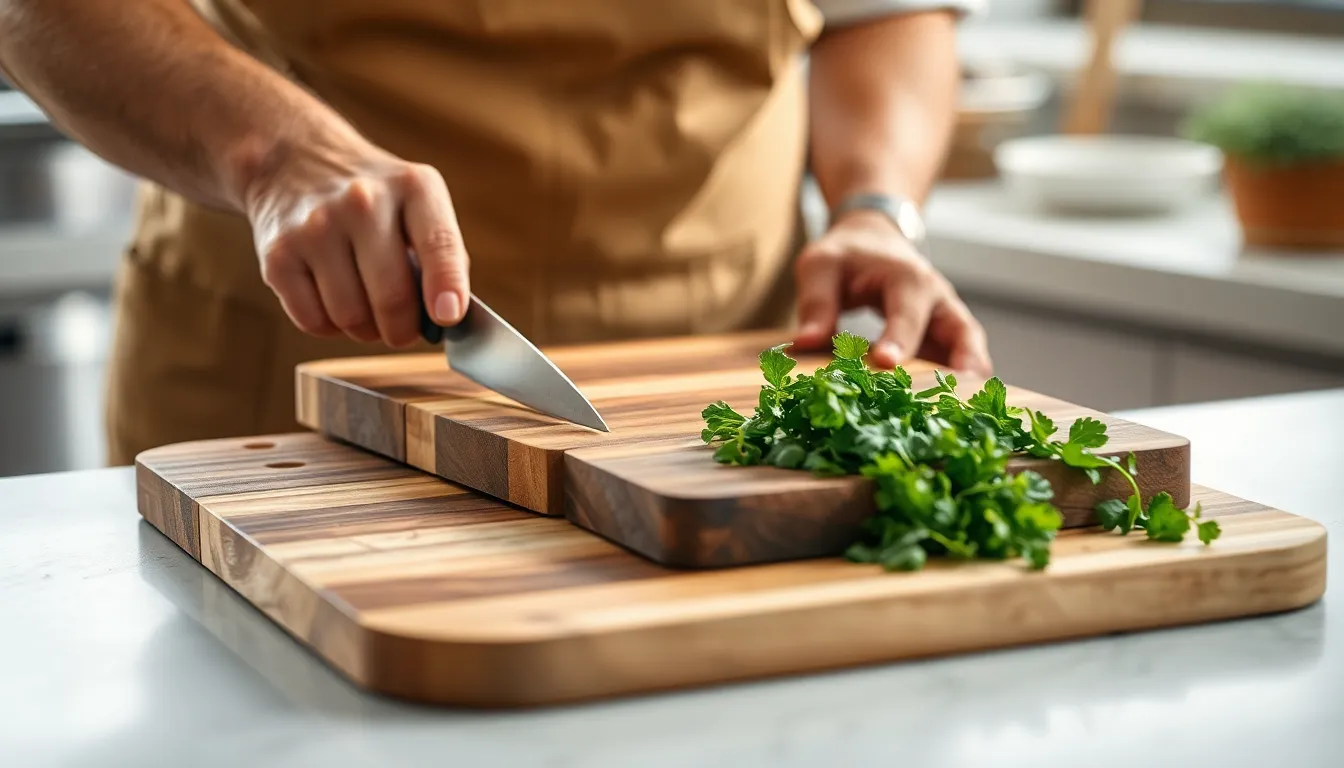
Walk into most restaurant prep kitchens and you'll spot thick wooden cutting boards at every station. It's not tradition or aesthetics driving this choice—it's microbiology.
Wood contains natural compounds that actively work against bacterial growth. When bacteria lands on a wooden surface, something remarkable happens: the wood fibers pull moisture away from the bacteria, essentially dehydrating them. The bacteria that manage to penetrate the surface become trapped in the wood's structure, where they can't multiply and eventually die off.
Plastic boards don't have this advantage. Every slice of your knife creates tiny grooves—microscopic canyons where bacteria hide and thrive. You can't see them, but they're there, protected from your sponge and even some sanitizers.
What the research actually shows
Dean Cliver, a microbiologist at UC Davis, spent years testing this theory. His team deliberately contaminated wood and plastic boards with bacteria like E. coli and Salmonella. The results surprised even seasoned food safety experts.
On wooden boards, bacterial counts dropped dramatically within minutes. The bacteria essentially vanished into the wood grain. On plastic boards—especially those with existing knife marks—bacteria multiplied in those protected grooves. Even after washing with hot soapy water and bleach solutions, significant bacterial populations survived in the scarred plastic.
The findings flipped conventional wisdom on its head. That "easy to sanitize" plastic surface? It's only easy to sanitize when it's brand new and unmarred.
Why your technique matters more than material
Chen emphasizes that wood isn't magical—it requires respect and proper care. A neglected wooden board left wet overnight can develop problems. A well-maintained one becomes safer with age.
The key lies in understanding moisture. After cutting raw chicken or rinsing vegetables, wooden boards need to dry completely. Standing boards upright allows air circulation on both sides. The drying process is part of wood's antibacterial action—bacteria can't survive without moisture.
Plastic boards need replacing far more often than people realize. Those knife grooves appear faster than you'd think. Chen recommends running your fingernail across the surface. If you feel distinct ridges, bacteria have new homes. Time for a replacement.