Introduction
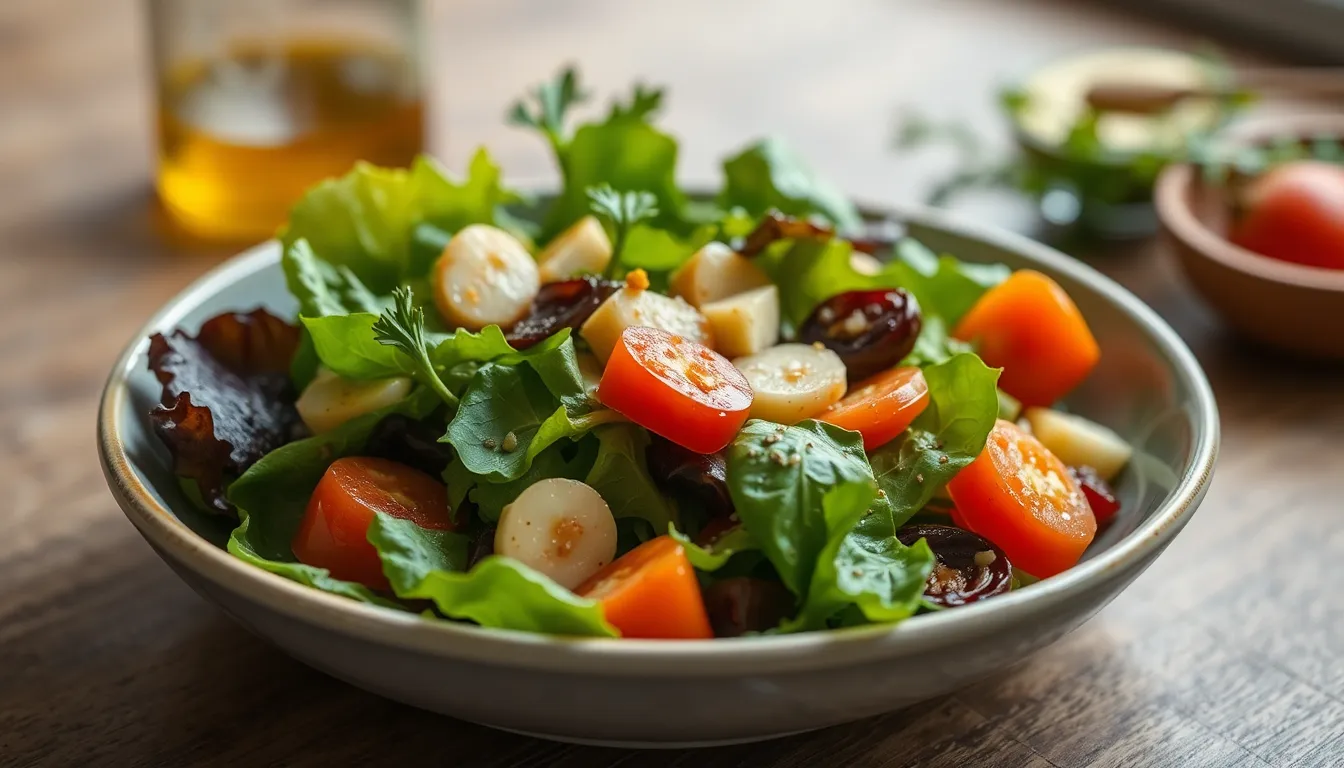
You've minced the shallot until it's paper-thin. Squeezed fresh lemon juice. Torn basil leaves by hand so they release that anise-like perfume. Then you reach for the olive oil and glug, glug, glug—suddenly that bright, zingy dressing you imagined tastes like you're eating a salad that's been swimming in a puddle. The lemon's gone quiet. The shallot's disappeared. All you taste is that slick, heavy coating on your tongue.
This is one of the most common kitchen mistakes, and it happens because we've internalized the idea that more oil equals better flavor. It doesn't. Too much oil doesn't amplify—it smothers.
Why oil becomes the bully in your bowl
Oil is a carrier, not a star. Its job is to help other flavors cling to lettuce leaves and vegetables, creating that glossy coat that makes salads irresistible. But oil itself tastes primarily of richness and, depending on the variety, maybe a peppery bite or grassy note. That's it.
When you pour too much, oil forms a thick barrier between your taste buds and everything else. The vinegar or citrus that should wake up your palate gets diluted. Fresh herbs lose their punch. Garlic and shallots fade into the background. You're left with an oily mouthfeel and a nagging sense that something's off, even if you can't pinpoint exactly what.
The other issue? Too much oil makes dressings separate faster. Instead of a smooth emulsion, you get that telltale layer of oil floating on top, which means some bites are drenched while others taste like naked greens.
The golden ratio isn't just a suggestion
Classic French vinaigrette operates on a 3-to-1 ratio: three parts oil to one part acid. This isn't arbitrary. It's the balance point where richness and brightness play together instead of fighting for dominance.
Start with your acid—red wine vinegar, champagne vinegar, lemon juice, whatever you're using. Add salt, pepper, minced shallot, a dab of mustard if you want help with emulsification. Then slowly drizzle in your oil while whisking. The key word is slowly. You want the oil to incorporate in tiny droplets, not flood the bowl all at once.
If you're eyeballing it, think about this: two tablespoons of vinegar needs about six tablespoons of oil. That's a quarter cup, which sounds like nothing when you're standing there with the bottle. But it's enough. Trust the ratio.