Introduction
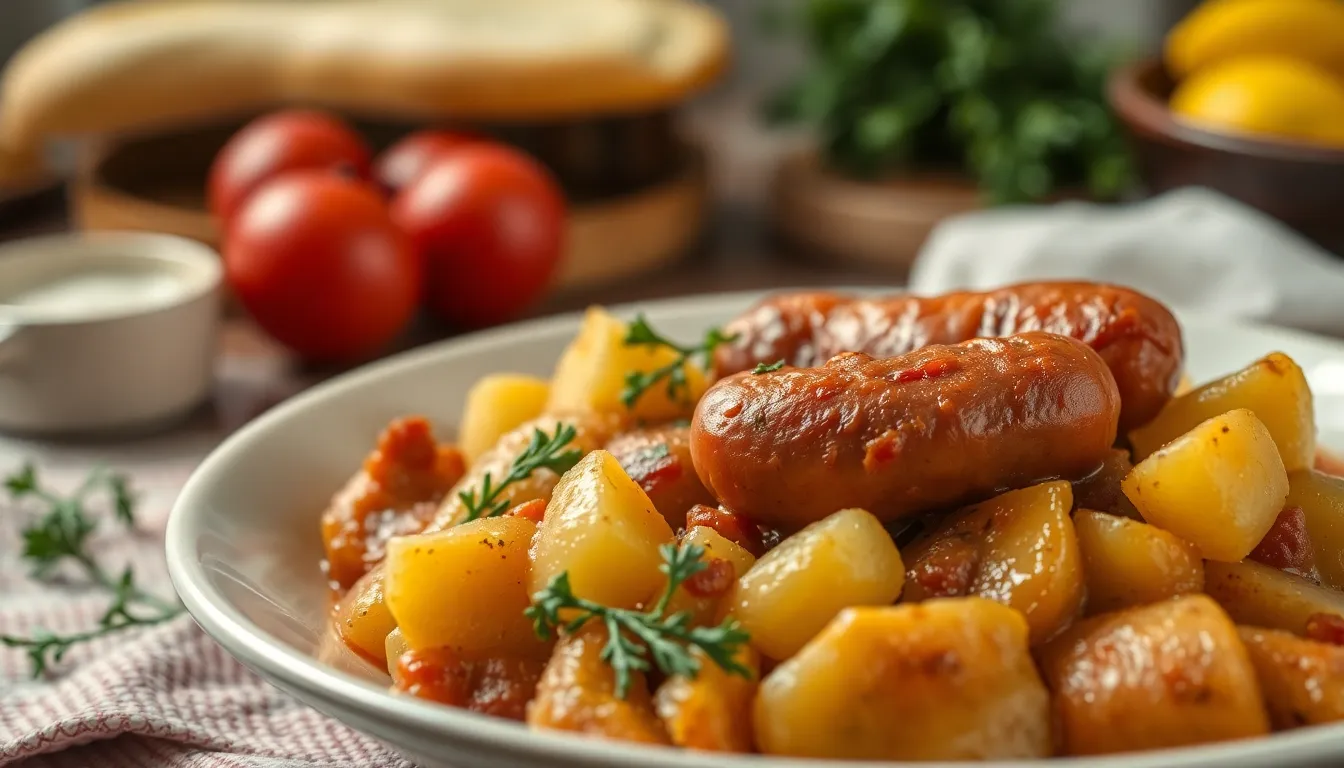
Every Sunday at 4 p.m., Marie's kitchen smells like browned sausage and caramelized onions. She pulls a battered roasting pan from the oven—the same pan she got as a wedding gift in 1994—and sets it on trivets that have seen better days. The sausages are bronzed and split at the seams. The potatoes are golden-edged and fork-tender. Her grandchildren appear from wherever they'd been playing, drawn by the smell alone.
This isn't a recipe Marie found online or adapted from a cookbook. It's the dinner she made on Tuesday nights when her kids had soccer practice, on Sundays when the whole family gathered, on evenings when she was too tired to think but knew everyone needed to eat. For thirty years, this sausage and potato bake has quietly held her family together, one simple pan at a time.
Why this recipe endures
There's a reason some dishes get made for decades. They don't demand special ingredients or culinary skill. They don't create a mountain of dishes. This bake works because it's forgiving—if the oven runs hot, the potatoes get crispier. If dinner's delayed, it stays warm in the turned-off oven without drying out.
Marie's version uses Italian sausages because that's what her own mother used, but she's watched her daughters make it with chicken sausage, kielbasa, even chorizo when they're feeling adventurous. The vegetables change with the seasons too. Zucchini in summer. Fennel in fall. Brussels sprouts in winter. The foundation stays the same: protein, potatoes, whatever needs using up, all roasted until the edges turn golden and the bottom of the pan develops those stuck-on bits that taste like concentrated comfort.
The recipe (as simple as it gets)
The setup
Everything goes into one pan. Marie doesn't bother with precise measurements anymore—she eyeballs the olive oil, dumps in the potatoes, scatters the onions and peppers. The garlic gets smashed with the flat of her knife, skins and all, because that's how her mother did it. She learned that the potatoes need to be cut roughly the same size or they won't cook evenly, but beyond that, precision doesn't matter much.
The real key is spreading everything in a single layer. Crowded vegetables steam instead of roast. They turn soft instead of developing those crispy, almost-burnt edges that Marie's grandkids fight over. She uses a massive roasting pan, the kind that barely fits in the oven, so there's room for everything to breathe.
The roasting
At 425°F, the transformation happens slowly then all at once. For the first twenty minutes, not much seems to change. Then the onions start to collapse and caramelize. The sausages begin splitting, releasing their fat into the potatoes below. The smell shifts from raw and vegetal to rich and meaty.
Marie turns everything halfway through—flipping the sausages, stirring the vegetables so the ones on the edges don't burn. By minute forty-five, the potatoes are golden with patches of deep brown. The peppers have charred spots. The sausages wear a mahogany-colored crust. When she shakes the pan, you can hear everything sizzle and crackle.
What makes it work
The sausages season everything as they cook. Their fat renders into the potatoes. Their juices pool beneath the vegetables. Marie never adds stock or wine or any liquid because the sausages provide enough moisture. By the end, the bottom of the pan is glazed with caramelized bits—fond, if you want to get technical, but Marie just calls it flavor.
She lets it rest for five minutes after pulling it from the oven. Not because she read that somewhere, but because she burned her mouth enough times in the early years to learn patience.