Quick Dinners
Recipe

The peanut noodle bowl a food writer makes when inspiration runs low

Yummy Editorial
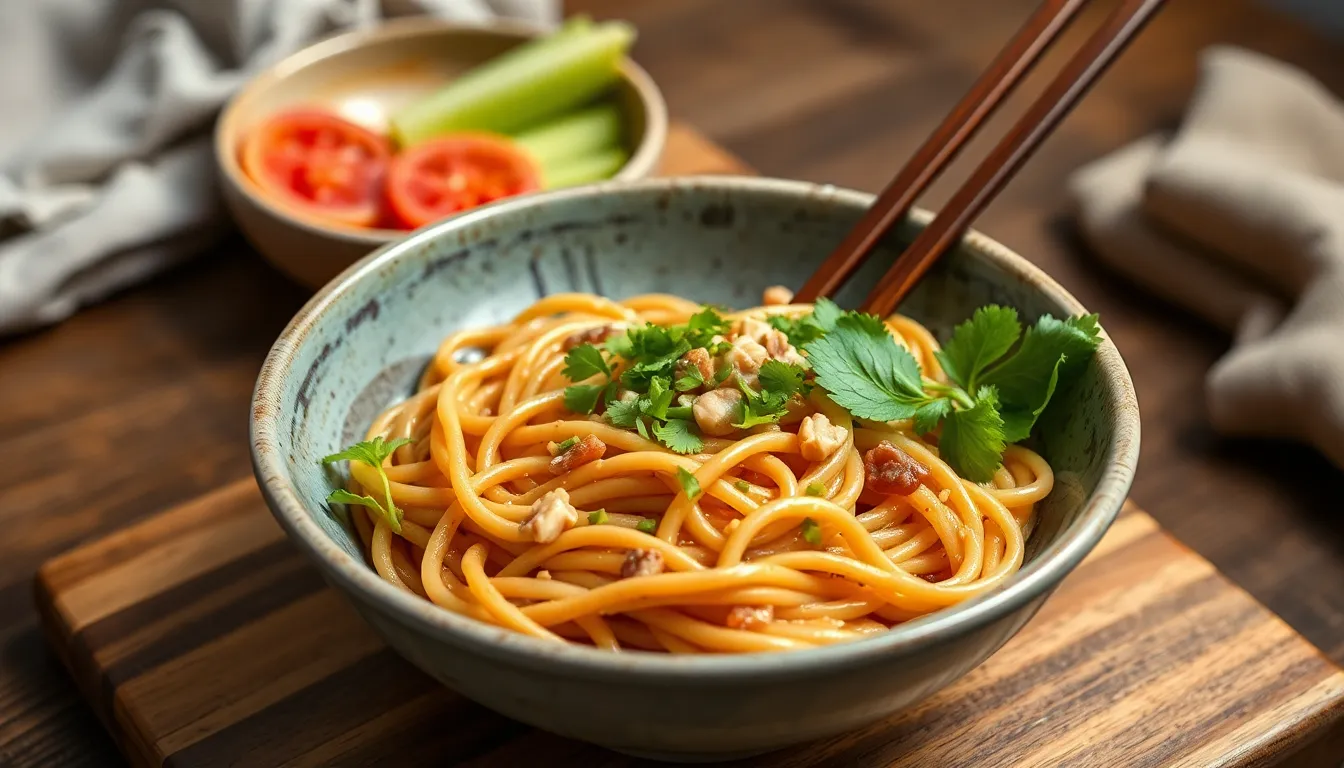
Photo: The peanut noodle bowl a food writer makes when inspiration runs low
Prep

10m

Cook

10m

Total

20m

Servings

4 servings

Ingredients

  • 12 oz dried noodles (spaghetti, udon, or rice noodles)
  • 1/3 cup creamy peanut butter
  • 3 tablespoons soy sauce
  • 2 tablespoons rice vinegar
  • 1 tablespoon sesame oil
  • 1 tablespoon honey or maple syrup
  • 1 teaspoon grated fresh ginger
  • 2 cloves garlic, minced
  • 2-4 tablespoons warm water (for thinning)
  • 2 cups mixed vegetables (bell peppers, cucumber, edamame, snap peas)
  • 2 scallions, sliced
  • 2 tablespoons chopped peanuts
  • Lime wedges for serving
  • Red pepper flakes (optional)

Instructions

  1. Cook noodles according to package directions. Drain and rinse under cold water.
  2. While noodles cook, whisk together peanut butter, soy sauce, rice vinegar, sesame oil, honey, ginger, and garlic in a large bowl.
  3. Add warm water one tablespoon at a time until sauce reaches a pourable consistency.
  4. Add drained noodles to the bowl with sauce and toss until well coated.
  5. Top with your choice of vegetables, scallions, and chopped peanuts.
  6. Serve at room temperature or chilled, with lime wedges and red pepper flakes on the side.

Introduction

It's 6:47 on a Wednesday. The produce drawer holds half a bell pepper, three wilted scallions, and something that might've been cilantro last week. There's a deadline looming, dishes piled in the sink, and exactly zero creative energy left for dinner. This is when I make peanut noodles.

Not because they're trendy or photogenic—though they photograph better than they have any right to—but because this bowl asks almost nothing of you and gives back everything. The sauce comes together in one bowl while water boils. The vegetables are whatever survived the week. Twenty minutes later, you're twirling noodles coated in creamy, salty-sweet peanut sauce that tastes suspiciously like you tried.

Why this works when you're too tired to cook

Peanut noodles belong to that rare category of dishes that taste complex but require almost no technique. There's no sautéing, no precise timing, no moment where everything needs to happen at once. You're basically making fancy peanut butter sauce and tossing it with carbs.

The magic happens in the sauce itself. Peanut butter gives you richness and body. Soy sauce adds salt and depth. Rice vinegar cuts through with brightness. A touch of honey balances everything, while sesame oil makes it taste like you ordered from somewhere expensive. Fresh ginger and garlic—even the jarred stuff—wake the whole thing up.

What makes this truly brilliant for exhausted weeknights is its flexibility. The sauce is forgiving. Too thick? Add water. Too thin? More peanut butter. Forgot the honey? A squeeze of sriracha works. Out of rice vinegar? Lime juice is fine. The noodles don't even need to be Asian—I've made this with spaghetti more times than I'll admit in public.

Building your emergency noodle bowl

The noodle base

Any long noodle works here. Udon gives you chewy thickness that holds sauce beautifully. Soba brings nutty flavor. Rice noodles stay light and slippery. Regular old spaghetti from the back of the pantry does exactly what you need it to do. Cook them just until tender, then rinse under cold water—this stops the cooking and washes away excess starch that would make everything gummy.

The five-minute sauce

This happens in whatever bowl you plan to serve from. Whisk peanut butter, soy sauce, rice vinegar, sesame oil, and honey until it looks like smooth caramel. Grate in fresh ginger if you have it, or stir in a spoonful from the jar. Mince garlic or press it through a crusher. Then comes the important part: whisking in warm water, one tablespoon at a time, until the sauce transforms from thick paste to something pourable. It should coat a spoon but still drip off in ribbons.

The first time you make this, you'll probably add too little water and end up with clumpy noodles. That's fine—just add more water directly to the bowl and keep tossing. The sauce comes back together.

The whatever-you-have vegetables

Here's where you empty the crisper drawer. Bell peppers cut into thin strips. Cucumbers sliced into half-moons for crunch. Shredded cabbage or carrots. A handful of edamame from the freezer. Snap peas if you're feeling fancy. Even those baby tomatoes rolling around in the back.

Nothing needs cooking unless you want it to. Sometimes I'll quickly blanch snap peas in the noodle water just before draining. Other times everything goes in raw because I cannot be bothered. Both versions taste exactly as good as you need them to.
Making it yours

Essential kitchen gear for your recipes

Hand-picked tools we recommend for home cooks.

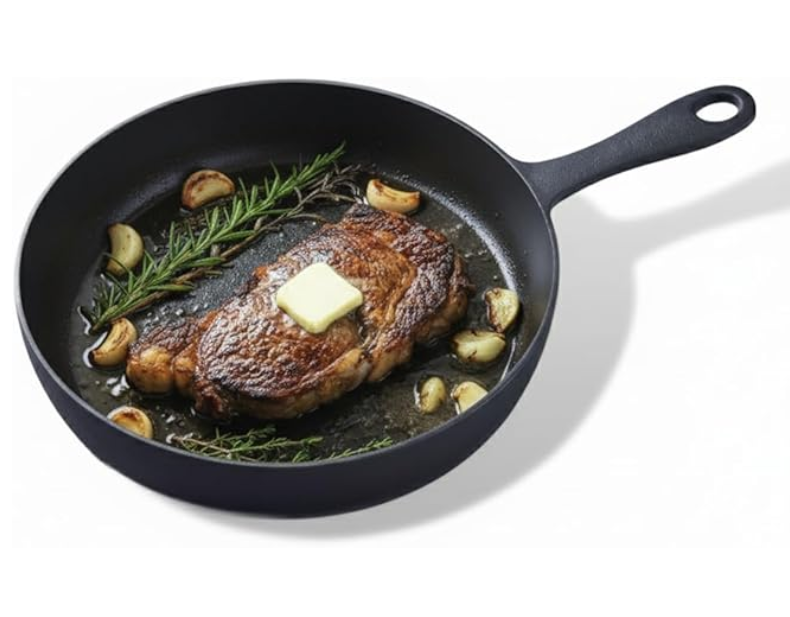
Flambo Skillet, Naturally Non-Stick

Flambo Skillet, Naturally Non-Stick

Pre-seasoned cast iron skillet for searing, baking, and stovetop-to-oven cooking.

Check price on Amazon
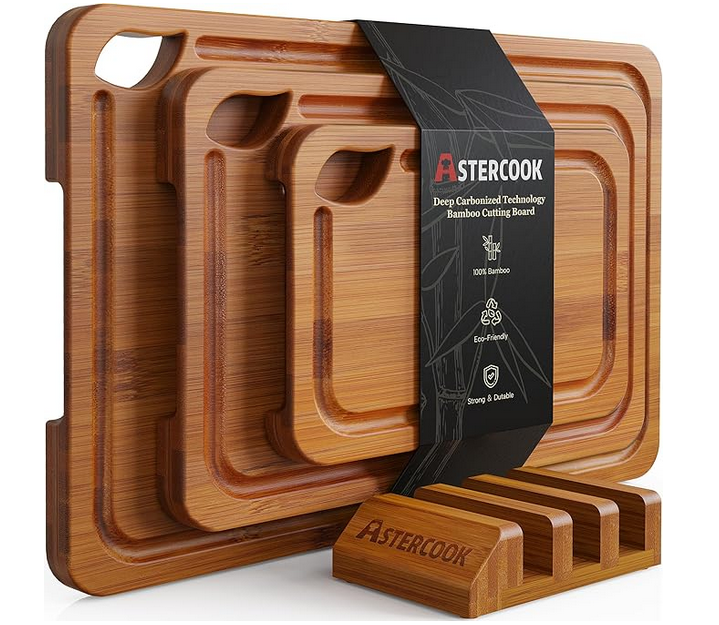
Astercook Reversible Charcuterie Board

Astercook Reversible Charcuterie Board

Deep carbonized wooden cutting board, reversible and knife-friendly for prep and serving.

Check price on Amazon
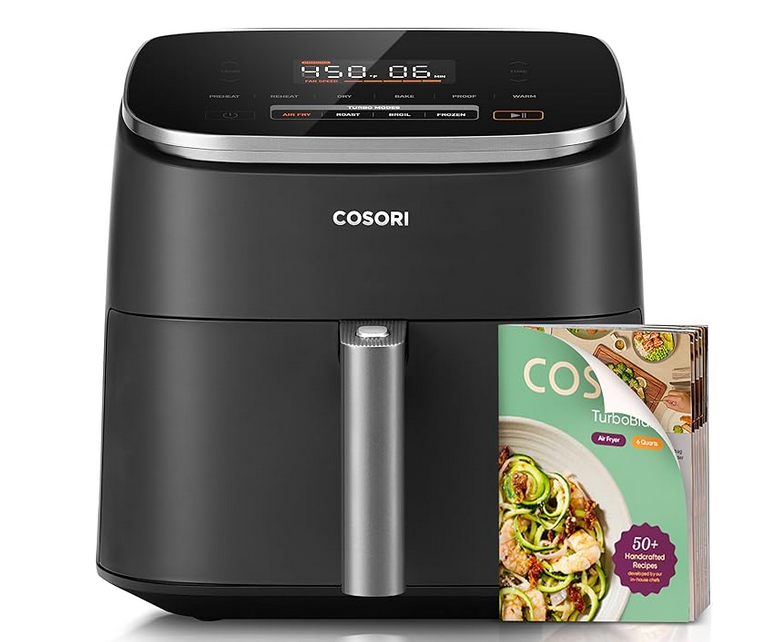
TurboBlaze Premium Ceramic Coating Air Fryer

TurboBlaze Premium Ceramic Coating Air Fryer

Air fryer with ceramic coating, 90°F–450°F range for crispy results with less oil.

Check price on Amazon

Keep a jar of this sauce in the fridge and you've got lunch for days. It thickens up cold, so loosen it with a splash of water before tossing with noodles. Add a fried egg on top for breakfast-dinner. Stir in shredded rotisserie chicken or pan-fried tofu when you need protein.

The toppings matter more than you'd think. Chopped peanuts add textural contrast against the soft noodles. Scallions give sharp freshness. A squeeze of lime right before eating brightens everything. Red pepper flakes if you want heat that builds slowly.

Some nights I'll add a spoonful of gochujang to the sauce. Other times it's a drizzle of chili oil at the end. When I'm feeling particularly uninspired, everything gets tossed together and eaten straight from the bowl while standing at the counter.

The best part

This tastes better at room temperature than hot, which means you can make it ahead and it actually improves. The noodles soak up the sauce. The vegetables soften just slightly. Everything melds together into something that feels intentional, even though you made it in the clothes you've been wearing since morning.

It's the bowl that saves you when cooking feels impossible. When the week has wrung you dry and dinner still needs to happen. When you need something satisfying that won't judge you for taking shortcuts.

Keep peanut butter in the pantry, and you're never more than twenty minutes from this.