Introduction
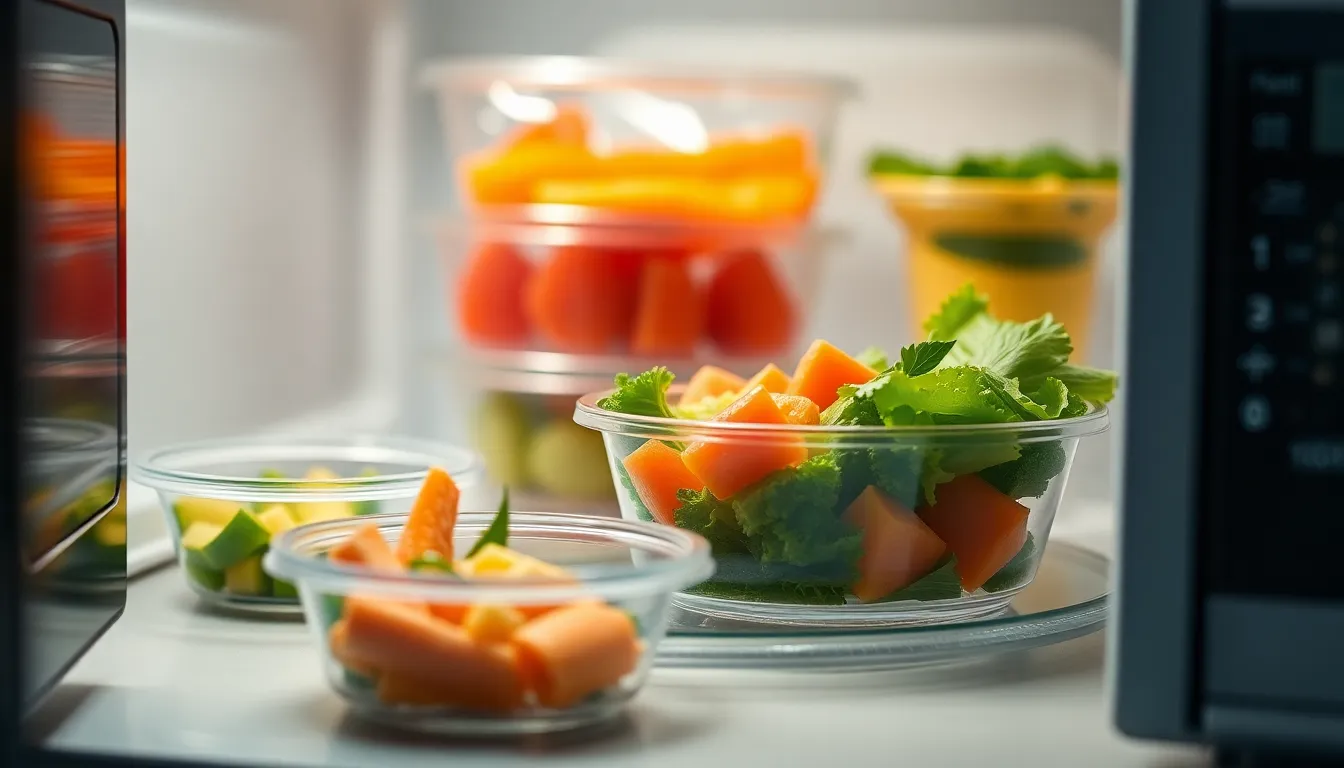
You're standing at the microwave at 12:47 PM, leftover pasta in a takeout container, finger hovering over the start button. The plastic feels slightly warped from yesterday's reheating. There's that faint chemical smell when you crack the lid—the one you've learned to ignore. You hit start anyway because lunch breaks are short and doing dishes feels impossible right now.
But that warped edge and odd smell? They're telling you something. According to food scientists, that plastic container is doing more than just holding your lunch—it's potentially releasing microscopic particles and chemicals directly into your food with every reheat.
What Actually Happens When Plastic Meets Heat
Plastic containers aren't inert. They're complex materials made from polymers, plasticizers, stabilizers, and various additives designed to make them flexible, durable, or transparent. When you heat them, especially repeatedly, those bonds start breaking down.
Dr. Rolf Halden, a professor of environmental health engineering, describes it as a slow-release system. Heat accelerates molecular movement. Those tiny chemical compounds—phthalates, BPA, and newer substitutes like BPS—begin migrating from the container into anything fatty or acidic touching the plastic. Tomato sauce, cheese, oils, butter. The fattier the food, the more efficient the transfer.
The term "microwave-safe" sounds reassuring, but it primarily means the container won't melt or warp at typical microwave temperatures. It doesn't guarantee that chemicals won't leach out. It's a structural claim, not a chemical safety one.
The Microplastic Problem Nobody Saw Coming
Beyond the chemical additives, there's a newer concern: microplastics themselves. These tiny plastic fragments—some so small they're measured in nanometers—break off through mechanical stress and heat exposure.
Recent studies found microplastics in human blood, lungs, and placentas. While researchers are still mapping the health impacts, the presence alone raises questions. When you microwave that yogurt container or cottage cheese tub—never designed for reheating—you're essentially creating a microplastic generator. The plastic surface degrades with each heating cycle, releasing particles directly into your meal.
Even BPA-free containers, marketed as the safer choice, often contain replacement chemicals like BPS or BPF. Early research suggests these alternatives may pose similar hormonal disruption risks. The label swap solved a marketing problem more than a safety one.
Why Some Containers Are Worse Than Others
Not all plastics behave the same way under heat. Single-use containers—the clamshells from restaurant takeout, disposable storage boxes, plastic wrap—are particularly problematic. They're engineered for room temperature storage, not repeated thermal stress.
Look at the recycling codes. Containers marked with #1 (PET) or #6 (polystyrene/Styrofoam) should never see the inside of a microwave. Even #5 (polypropylene), often labeled microwave-safe, degrades after multiple heating cycles. Those cloudy patches forming on your old Tupperware? That's structural breakdown—crazing, in technical terms—and it signals chemical changes happening within the plastic matrix.
Scratched or damaged plastic accelerates leaching. Every nick creates more surface area for chemicals to escape. That's why food scientists suggest retiring containers once they show wear, regardless of what the label promises.