Introduction
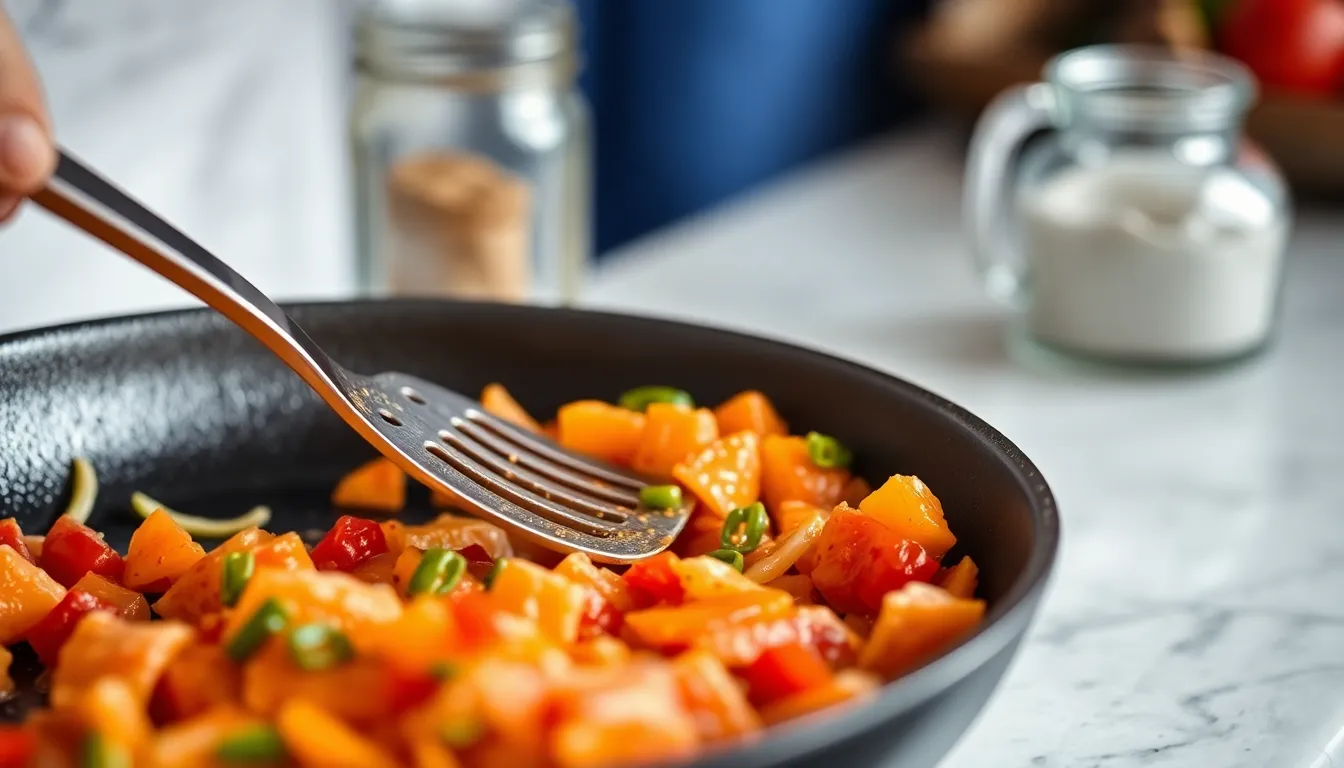
The eggs were sticking again. Sarah stared at her nonstick pan—barely two years old—wondering why it no longer lived up to its name. The surface looked fine, no obvious scratches or gouges. But every morning, her scrambled eggs clung stubbornly to spots that used to release effortlessly. She'd been careful, or so she thought. The culprit sat innocently in her utensil crock: a sleek metal spatula she'd used hundreds of times because it felt sturdy and slid so smoothly under omelets.
The invisible erosion happening in your kitchen
Nonstick coatings aren't bulletproof. They're engineered layers—often PTFE (polytetrafluoroethylene) or ceramic composites—designed to be slippery but also surprisingly vulnerable. When metal meets this surface, physics takes over. Even if you're not pressing hard or scraping aggressively, metal utensils are harder than the coating itself. Each flip, each stir, each gentle nudge removes microscopic particles. The pan doesn't fail dramatically. It degrades quietly, meal by meal, until one morning your pancakes stick and you wonder what went wrong.
The damage isn't always visible to the naked eye. A pan might look pristine under kitchen lighting but show a constellation of micro-abrasions under magnification. These tiny scratches compromise the coating's integrity, creating uneven spots where food finds purchase. Worse, once the protective layer thins in places, it deteriorates faster. Heat accelerates the breakdown. Oil seeps into compromised areas. What starts as invisible damage becomes a functional failure.
What actually happens to the coating
Think of nonstick coating like a tight-knit fabric. Metal utensils act like tiny knives, snipping threads one at a time. You might not see the first hundred cuts, but the fabric weakens. PTFE coatings are typically 20-30 microns thick—about one-third the width of a human hair. A metal spatula edge, even rounded, can shave away fractions of a micron with each pass.
Ceramic nonstick surfaces face similar issues. These coatings rely on a sol-gel technology that creates a smooth, glassy finish. Metal tools create micro-fractures in this glass-like layer. Once fractured, the surface loses its release properties in those spots. The pan starts developing "hot spots" where food browns unevenly or sticks unexpectedly.
Temperature makes everything worse. Nonstick pans heated above medium-high—a common mistake when you're rushing—become more brittle. Add metal utensils to an overheated pan, and you're essentially sandpapering a surface that's already stressed.