Introduction
Sarah Martinez spent fifteen summers cooking over campfires at a wilderness retreat in Colorado, and she learned something most home cooks never consider: the best weeknight dinner method might be the one that doesn't require a kitchen at all. Those foil packets she'd been sealing around the fire—salmon with lemon and dill, chicken thighs with potatoes and rosemary—worked just as beautifully on her oven rack at home. No pans to scrub. No splattered stovetop. Just tear open the steaming pouch and dinner's ready.
She started sharing her technique on a local cooking forum three years ago, and it spread fast. Because here's what matters on a Wednesday at 6:47 PM: you want food that tastes like you tried, with cleanup that looks like you didn't.
Why sealed packets change weeknight cooking
The principle is simple. You're creating a tiny steam oven inside each piece of foil. Everything cooks in its own moisture—proteins stay tender, vegetables get just soft enough, and all those flavors concentrate instead of evaporating into your kitchen.
Martinez calls it "cooking in its own sauce," and she's right. The lemon juice you drizzle becomes a light glaze. The butter melts into the fish. The herbs stick to everything instead of burning on a hot pan. And because nothing touches your cookware directly, there's almost nothing to clean afterward.
It's not fancy. It won't work for everything. But for getting dinner done when you're tired, it's hard to beat.
What actually works in foil packets
Salmon with citrus and herbs
This is where most people start, and for good reason. A salmon fillet cooks through in about eighteen minutes at 400°F, and it stays ridiculously moist. Martinez layers thin lemon slices on the foil first, places the salmon on top, adds a pat of butter, fresh dill, salt, and a splash of white wine. Seal it tight. The fish steams in all that citrus and butter, and when you open the packet, the smell alone is worth the effort.
The key: don't overcrowd. One piece of fish per packet. If you're feeding four people, you're making four individual pouches.
Chicken thighs with root vegetables
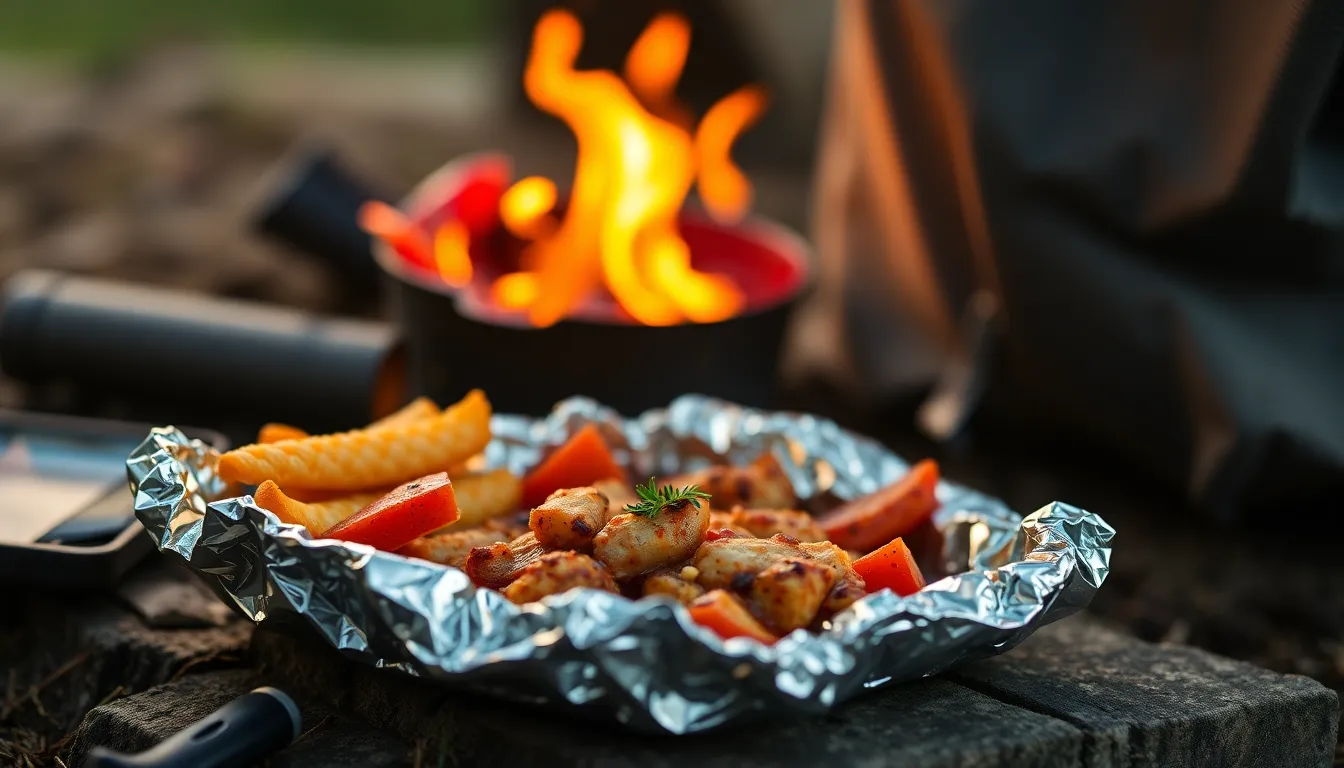
Dark meat handles this method better than breasts—it won't dry out. Martinez cuts small potatoes into quarters, adds carrot coins, tucks in a chicken thigh (bone-in works best), then seasons with olive oil, garlic, thyme, and a few red pepper flakes. Twenty-five minutes at 425°F. The chicken fat renders into the vegetables, which get golden at the edges where they touch the foil.
She learned this one around a campfire in 2011, adjusting the timing until the potatoes were actually tender and not still crunchy in the center.
Shrimp with tomatoes and feta
Fast. Stupidly fast. Shrimp need maybe twelve minutes, so this becomes the panic dinner when you forgot to plan anything. Cherry tomatoes, a handful of shrimp, crumbled feta, minced garlic, olive oil, oregano. The tomatoes burst and create this light, briny sauce. The feta gets soft and slightly melted. Serve it over rice or with bread to soak up what's left in the packet.
Martinez says this is her most-requested recipe from the forum. People make it, can't believe it worked, then make it again two days later.
Sausage with peppers and onions
Slice Italian sausage into thick coins. Add bell pepper strips, sliced onions, a drizzle of balsamic vinegar. The sausage releases its fat, the peppers soften, the onions caramelize slightly where they press against the foil. It tastes like something that simmered for an hour but took twenty-two minutes.
This one's forgiving. You can use whatever color peppers you have. Swap the sausage for kielbasa. Add a handful of baby potatoes if you want it more filling.