Introduction
Tuesday evening, 6:45 PM. I'm watching my neighbor—an excellent home baker who makes sourdough that could win awards—hack at an onion with her knife gripped like a tennis racket. Each chop is a separate, careful motion. Her knuckles are exposed. The pieces scatter across her cutting board in wildly different sizes. She's been cooking dinner four nights a week for fifteen years.
This is the scene Chef Marcus Rivera sees constantly in his beginner culinary classes at the San Francisco Cooking Institute. "People come in who've made thousands of meals," he tells me, "but nobody ever showed them how to actually hold a knife."
The gap nobody talks about
Here's the thing about knife skills: most of us learned to cook from parents, friends, or online videos that skipped straight to the recipe. We absorbed techniques through osmosis—some good, many awkward, a few downright dangerous. And because dinner still gets made, we never realize we're working three times harder than necessary.
Rivera has spent twelve years teaching professional techniques to home cooks. He says the biggest revelation for his students isn't learning fancy cuts—it's discovering that basic knife work shouldn't hurt your hand or take forever.
The pinch grip (not the handle death-grip)
Most beginners wrap all five fingers around the handle like they're holding a hammer. Rivera says this is the first thing he corrects.
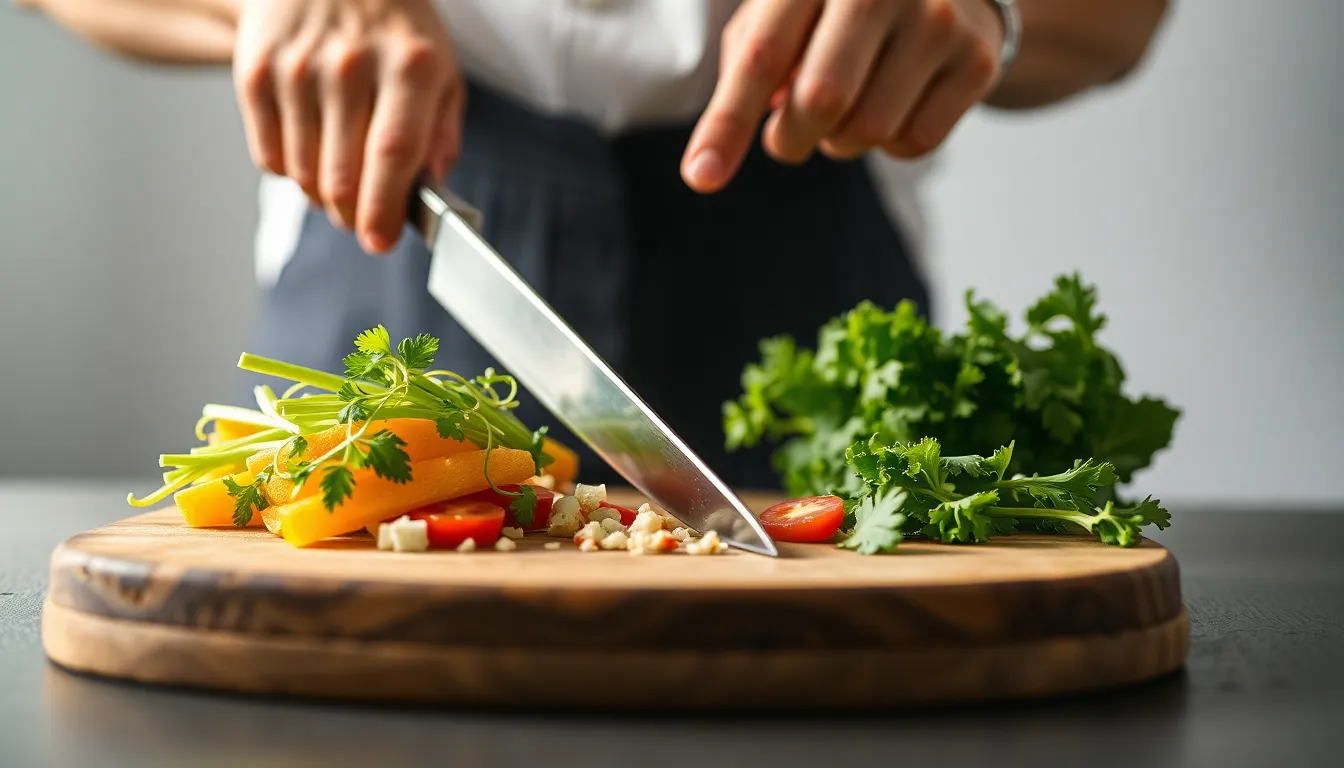
"Pinch the blade where it meets the handle with your thumb and forefinger," he demonstrates. "Your other three fingers wrap loosely around the handle for guidance." This grip—called the pinch grip—gives you actual control over the blade. Your hand doesn't cramp. The knife becomes an extension of your arm rather than a separate tool you're wrestling with.
The difference is immediate. Students who've been cooking for decades suddenly find their knife moving where they want it to go. Dicing feels smoother. Less effort, better results.
The claw (your fingers will thank you)
Your non-knife hand needs technique too. Rivera sees countless people with fingertips extended, knuckles back, basically offering their fingers to the blade with each cut.
The claw technique curls your fingertips inward, knuckles forward. "Your knuckles become the guide rail," Rivera explains. "The flat side of the knife blade rests against them as you cut." This position is physically impossible to cut yourself in—the blade never gets near your fingertips.
It feels weird for about fifteen minutes. Then it feels safer, faster, and infinitely more confident. You can speed up because you're not worried about losing a fingertip.