Quick Dinners
Food News

A 20-Minute Dinner a Home Cook Made Every Night for a Month Straight

Yummy Editorial
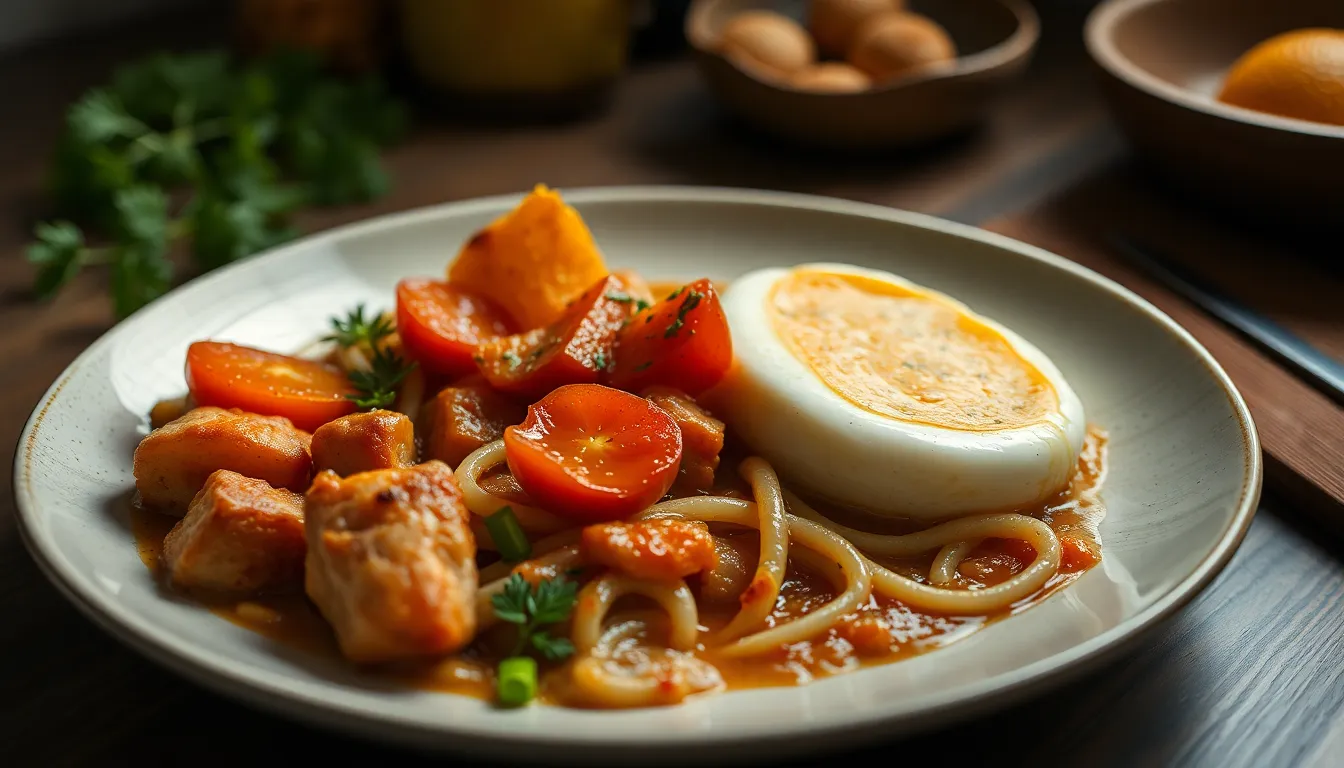
Photo: A 20-Minute Dinner a Home Cook Made Every Night for a Month Straight

Introduction

It was Tuesday evening, 6:47 p.m., and Sarah Chen stood in her kitchen staring at a package of chicken thighs. Her toddler was pulling pots from the lower cabinet, and her partner wouldn't be home for another hour. She'd already made this exact dinner four times that week—seared protein, quick-cooked vegetables, something starchy to soak up the pan sauce. But here's what surprised her: she wasn't tired of it yet.

What started as desperation became an experiment. Could she cook the same basic dinner every single night for a month without losing her mind? The answer turned out to be yes, and the template she developed changed how she thinks about weeknight cooking entirely.

Why the Same Dinner Actually Works

Most of us think variety means completely different meals each night. But restaurant cooks know better—they work with the same techniques and building blocks, just rearranged. Sarah's approach borrowed from that mindset: master one solid method, then swap the variables.

The formula takes twenty minutes because it eliminates decision fatigue. No scrolling through recipes at 5 p.m. No missing ingredients. Just a protein, a vegetable, and a quick pan sauce made from whatever's in the fridge door. The repetition isn't boring—it's freeing.

The Core Formula That Changes Everything

The foundation is dead simple: sear something with good browning, add vegetables that cook quickly, deglaze the pan, finish with butter or cream or citrus. That's it.

**Start with the protein.** Chicken thighs, pork chops, salmon fillets, even thick slices of halloumi. Pat them dry, season heavily with salt, get the pan smoking hot. That initial sear—the crackling sound when meat hits the skillet—builds the flavor base for everything else. Don't move the protein around. Let it develop that golden-brown crust that tastes like actual cooking, not steaming.

**Add quick vegetables.** This is where the variation happens. Cherry tomatoes burst and release their juices. Zucchini coins soften in three minutes. Frozen peas need thirty seconds. Thinly sliced bell peppers char at the edges. Spinach wilts into almost nothing. On nights when energy was low, Sarah used a bag of pre-cut coleslaw mix and called it done.

**Build the pan sauce.** Pull the protein out to rest. If the pan looks dry, add a splash of oil or butter. Toss in minced garlic (twenty seconds, until it smells like you're actually cooking). Deglaze with white wine, chicken stock, even the liquid from a jar of roasted red peppers. Scrape up the brown bits stuck to the pan—that's where dinner lives. Let it bubble for two minutes. Taste it. Add lemon juice if it needs brightness, butter if it needs richness, a spoonful of miso if it needs depth.
What Changed Each Night

Essential kitchen gear for your recipes

Hand-picked tools we recommend for home cooks.

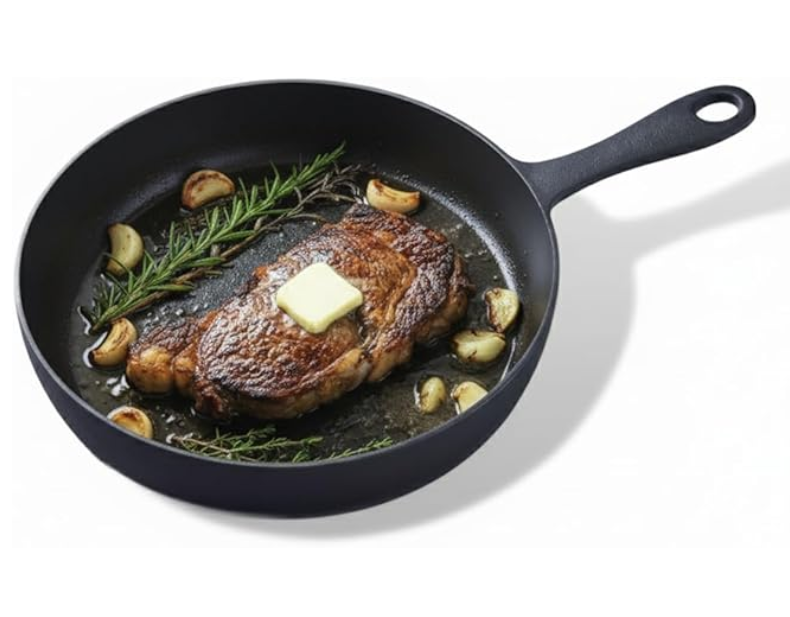
Flambo Skillet, Naturally Non-Stick

Flambo Skillet, Naturally Non-Stick

Pre-seasoned cast iron skillet for searing, baking, and stovetop-to-oven cooking.

Check price on Amazon
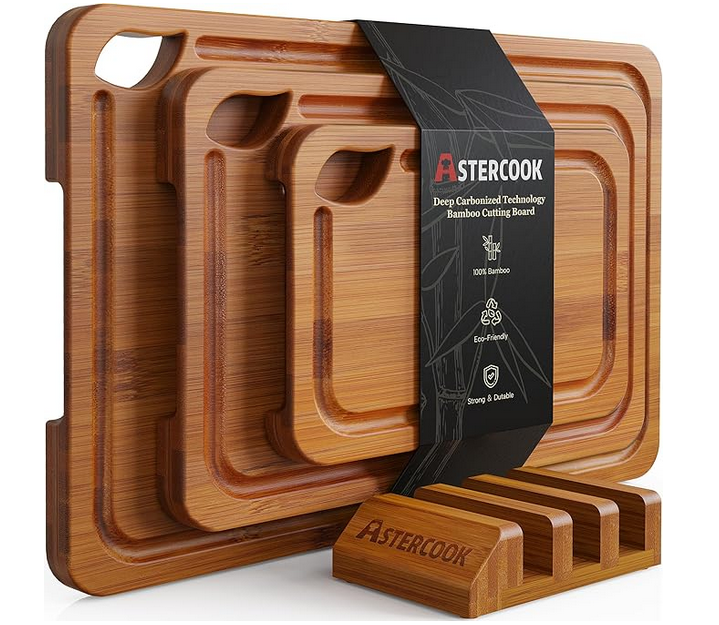
Astercook Reversible Charcuterie Board

Astercook Reversible Charcuterie Board

Deep carbonized wooden cutting board, reversible and knife-friendly for prep and serving.

Check price on Amazon
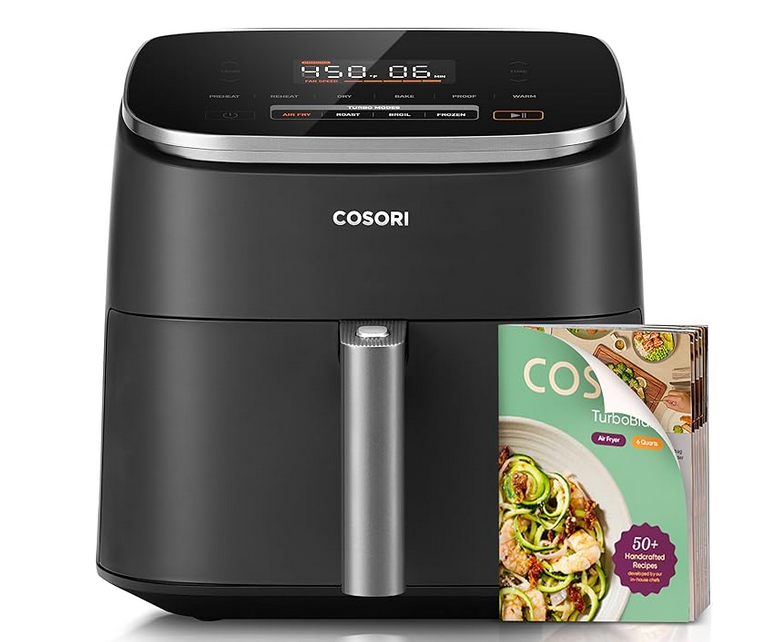
TurboBlaze Premium Ceramic Coating Air Fryer

TurboBlaze Premium Ceramic Coating Air Fryer

Air fryer with ceramic coating, 90°F–450°F range for crispy results with less oil.

Check price on Amazon

By week two, Sarah had figured out the swaps that kept things interesting. Italian night: chicken, sun-dried tomatoes, spinach, white wine, finished with parmesan. Greek night: pork, olives, oregano, lemon. Thai-inspired: salmon, snap peas, ginger, lime, fish sauce.

The pantry became her variation engine. A jar of harissa turned plain chicken and carrots into something North African. Soy sauce and sesame oil made the same setup taste completely different. Capers and white wine felt French. The protein changed based on what was on sale. The vegetables rotated through whatever looked good at the store.

On particularly exhausting nights, she kept the protein the same two days in a row and only changed the sauce. Chicken with creamy mustard sauce Monday, same chicken with tomato-caper sauce Tuesday. Her family didn't notice—or didn't care.

The Practical Details That Matter

**Use one large skillet.** Cast iron or stainless steel, something that holds heat and develops fond. Nonstick won't give you the caramelization you need.

**Cut vegetables smaller than you think.** They cook faster, and speed is the entire point. Thin coins, matchsticks, quarters—nothing thicker than half an inch.

**Rest the protein.** Those three minutes while you make the sauce let the juices redistribute. It's the difference between dry chicken and something people actually want seconds of.

**Rice or bread, not both.** Keep one starch on standby. Sarah batch-cooked rice on Sundays. Others might prefer crusty bread to soak up sauce, or keep a bag of frozen roasted potatoes in the freezer.

What a Month of This Actually Teaches You

By day thirty, Sarah wasn't following recipes anymore. She could look at random ingredients and know instinctively what would work together. Cooking stopped being a source of evening stress and became muscle memory—the good kind, where your hands know what to do while your brain handles homework questions and bath time negotiations.

The dinner itself wasn't special. But the time it gave back was.